"Laughing Toward Understanding: What Comedy Taught Me About Bias"
By: Dr. Bentley Lorene Gibson
My grandmother had a saying she pulled out any time life got heavy. As I have gotten older, and especially as a social psychologist who has spent much of my career studying bias, I have come to understand that statement in a much deeper way. Sometimes laughter is not a sign that something is funny. Sometimes it is how we survive something painful, and it can give us just enough emotional distance to examine what we might otherwise avoid.
“We laugh to stop from crying”
That idea stayed with me long enough that I eventually decided to study it directly, and what I found still feels remarkably relevant in 2026. Before I get to the study, I want to be very clear about something: racism is not funny, and I am not suggesting that racism, discrimination or prejudice should ever be made light of. These experiences carry serious psychological, social, professional and sometimes life-threatening consequences. Humor should never minimize someone's experience, excuse discriminatory behavior or turn another group's pain into entertainment. Used poorly, it can do the opposite of what we want, reinforcing stereotypes and alienating the very people we hope to reach. This is not a case for jokes about race at the next staff meeting. It is a case for understanding, with precision, when, why and how humor actually works.
Why Humor?
Laughter is one of the few human behaviors that cuts across culture, geography and social group. Long before we understand race, gender or social hierarchy, we understand smiles and playful interaction, and that shared instinct can create connection between people who otherwise perceive themselves as very different. Researchers studying what is known as the Target Empowerment Model examined what happens when members of negatively stereotyped groups openly acknowledge their identity and strategically use humor around stereotypes tied to their own group. Conversations across group lines often come loaded with anxiety on both sides, and that tension can make honest dialogue about bias incredibly difficult. Prior research suggested that humor could sometimes disrupt that tension and make a person more likable. I wanted to know if it could do more than that. Could it actually change what people believe?
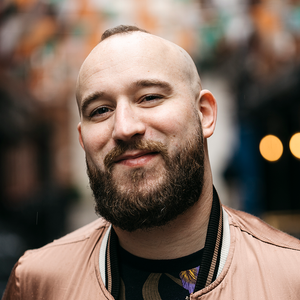
To find out, I took the question out of the lab. In 2017, Atlanta comedian Mark Kendall (Co-Founder & Chief Creative Officer of CoolCoolCool Productions) wrote and performed a one-man show at the Alliance Theatre called The Magic Negro and Other Blackity Blackness, using comedy to explore racism, racial stereotypes and the experience of being a Black man in America. It was funny, uncomfortable and thoughtful, and underneath the laughter sat a serious critique of how damaging racial stereotypes actually are. With the support of the Alliance Theatre, I assessed audience attitudes before and after the performance to see whether people were simply laughing for ninety minutes, or whether the experience genuinely shifted the way they thought about race.
The audience didn't just leave entertained. Their attitudes shifted. After the performance, they described Black men more positively, were more likely to recognize racism as a current issue rather than a relic of the past, and expressed greater concern about the limited roles available to Black Americans on television.
A comedy performance created a space where people could laugh while simultaneously confronting uncomfortable truths about race. The humor did not erase the seriousness of racism. It created another pathway into the conversation, and I believe part of the reason lies in how that humor was built. Mark Kendall was not repeating stereotypes for laughs, he was exposing them, showing the audience how absurd many of these beliefs become the moment we actually examine them. He also gave the audience a direct counterexample to the stereotypes being discussed, playing a Black man who was intelligent, observant and multidimensional, a strategy that closely reflects what target empowerment research describes. That distinction matters enormously, because not all humor reduces bias. Some of it reinforces it.
If you are going to use humor to challenge bias, four principles matter. Never use humor that attacks a group through a known stereotype, because if the joke depends on laughing at a marginalized group, you are likely reinforcing the very association you claim to be challenging. Use your own group as the example whenever possible, since self-directed humor changes the power dynamic and invites people into the conversation rather than positioning you as an outsider mocking someone else's identity. Highlight how little the stereotype actually makes sense, because exaggerating the logic behind a belief and holding it up to scrutiny can make its absurdity impossible to ignore. And challenge the stereotype rather than confirm it, since effective humor needs to expose the audience to something that counteracts the association, not just repeat it with a punchline attached.
We are living through a period when conversations about race, bias and workplace culture have become increasingly charged, and many organizations have responded by avoiding them altogether. But silence does not eliminate bias, and discomfort does not mean a conversation shouldn't happen. The real question is how we create conditions where people are willing to stay in the conversation long enough to actually learn something. Humor is one tool. Storytelling, film, theatre and art are others. What my research reinforced years ago, and what I believe even more strongly today, is that if we want to change bias, we have to understand the psychology of how people actually process difficult information. Facts alone are not always enough. Sometimes you have to lower the psychological defenses that keep people from hearing you in the first place, and laughter can help do that.
My grandmother probably was not thinking about social psychology when she talked about laughing to stop from crying, but there is a great deal of psychology buried inside that sentence. The goal was never to laugh at racism. The goal is to create enough psychological space that people can finally recognize how absurd the assumptions supporting it have always been. That is a very different kind of laughter, and maybe it's exactly the kind we need.
Sources
Focella, S. (2013). The elephant in the room: Using humor to acknowledge one's stigmatized identity and reduce prejudice. Dissertation, University of Arizona.
Stone, J., Whitehead, J., Schmader, T., & Focella, E. (2011). Thanks for asking: Self-affirming questions reduce backlash when stigmatized targets confront prejudice. Journal of Experimental Social Psychology, 47(3), 589–598.
About the author: Dr. Bentley Gibson, PhD, is a cognitive and developmental psychologist specializing in implicit bias, and the founder of The Bias Adjuster. Her published research includes studies on the early development of racial bias in children (Journal of Cognition and Culture).