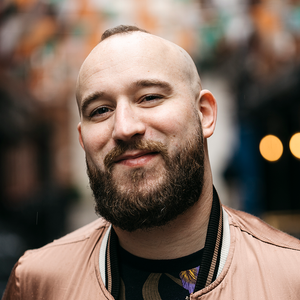
Challenging Bias in Beauty, the Workplace and Medicine: Remembering Kaleena Satchell (1983-2026)
By: Dr. Bentley Lorene Gibson
She counteracted bias in everything she did.
I never had the chance to meet Kaleena. But her little sister Kacey and I became very close in our college days at Spelman College. We bonded immediately, not just as Spelman sisters, but as Up North East Coast girls, Boston and NY. I didn't like going out much, but when I did go out with Kacey, it was fun. She brought out the life and joy in me, and she could make a mean rice and peas with stew chicken. We spent hours, sometimes days, together, laughing, sometimes crying, just enjoying life. It wasn't until I sat in Kaleena's funeral service, listening to all the beautiful things people said about her, that I realized exactly where Kacey got it from. Her big sister.
“Everything about her embodied beauty and I knew that was something I wanted to be too. She taught me how to love my dark skin. Which is really big in this world. She taught me to love every part of me!”
Bias in beauty standards
That's what Khloe Webb, the baby sister, said standing up at the service. Khloe, like Kacey and Kaleena, has the most beautiful skin. Not a flaw on it. It glows in the sunlight. Perfect, even, and dark. But as I often teach, and have studied my whole life, even published a paper on it entitled, White Bias in Children Across Cultures, from early childhood we develop a bias toward lighter skin as more attractive. Kaleena wasn't falling for it. And she made sure her baby sisters didn't either. That's bias in beauty standards.
Bias in the workplace
Her interviewing manager Deland Senatus from TransAction Corporate Shuttles in Boston told a story about the day he interviewed her. Before the interview, he saw her in the hallway, dancing. And when she walked into the room, she announced, "You are going to hire me." An hour later, he did. You could tell by the way he spoke about her how valuable she was to that organization. There she goes, counteracting bias again. Challenging the idea that you have to look, dress, act, speak a certain rather than just be your genuine, amazing self. That’s bias in the workplace.
Bias in the medical field
She was only 43. She passed away from colon cancer. The American Cancer Society's guidelines don't recommend screening until 45. One particularly relevant finding for your blog: ACS considered whether routine screening should be lowered below 45 in its 2026 update and decided not to do so for the general population, noting that colorectal cancer rates among adults 40–44 remain less than half those among adults 45–49. When a universal medical standard applies the same screening age to everyone, even though Black Americans experience a disproportionate burden of colorectal cancer and research has documented differences in when that risk emerges, we have to question whether treating everyone the same is actually treating everyone equitably. That's bias in medicine.
I'm sharing this story with you for four reasons. 1. Check in on the people you love, even in the middle of your own storm. Life difficulties happen, and you need each other. 2. Challenge bias everywhere you go, in the mirror, in the interview room, in the moment someone's worth gets quietly measured against a standard they were never meant to fit. 3. Watch out for your own biases, whatever they are. Know them, because you may push away someone amazing and miss out on a great friend, employee, or partner because of your stereotypes. 4. Challenge the standards themselves. In medicine, in education, in every institution. Most of them weren't designed for us. They were designed for white men.
Rest in power, Kaleena. You counteracted bias in everything you did. We'll keep counteracting it in your name.
Sources
American Cancer Society. (2026). American Cancer Society guideline for colorectal cancer screening. https://www.cancer.org/cancer/types/colon-rectal-cancer/detection-diagnosis-staging/acs-recommendations.html
Gibson, B., Robbins, E., & Rochat, P. (2015). White bias in 3–7-year-old children across cultures. Journal of Cognition and Culture, 15(3–4), 344–373. https://doi.org/10.1163/15685373-12342154
About the author: Dr. Bentley Gibson, PhD, is a cognitive and developmental psychologist specializing in implicit bias, and the founder of The Bias Adjuster. Her published research includes studies on the early development of racial bias in children (Journal of Cognition and Culture).