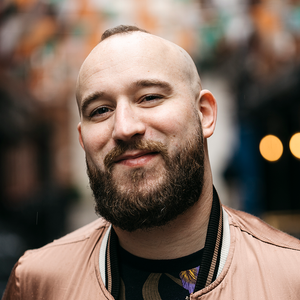
Who Academia Recognizes, in Life and in Death: Remembering Dr. Eugene Emory
By: Dr. Bentley Lorene Gibson
On the morning of my graduate school interview at Emory University, I was ready. As a Spelman junior, I had learned the research process from Dr. Laura Namy, and she had introduced me to Dr. Philippe Rochat, whose work on how children understand fairness connected with my own questions about how children develop racial identities. Then an accident on the highway made me late, and I arrived flustered.
I was also leaving the relative safety of an HBCU for a department where I saw very few Black people. I felt what Claude Steele and Joshua Aronson (1995) call stereotype threat: the pressure of knowing a negative stereotype about your group could shape how others judge you.
"That is not something we do in THIS department"
When I explained that I wanted to study how children develop racial identities, the response I remember was: "That is not something we do in THIS department. Maybe you should go to the sociology department." I thought of the teacher in The Autobiography of Malcolm X who discouraged Malcolm from the career he imagined. I had come to talk about becoming a social scientist, and I felt my question turned away before I could pursue it.
This was a department that studied nonhuman primates to ask what is uniquely human and taught cross-cultural research around the world. Meanwhile, the Atlanta University Center, including Spelman, sat a short drive away, and I rarely saw faculty spending meaningful time there. There was knowledge, talent, and history in the department's own backyard. I remember sitting in class on a lesson about the Pirahã people of the Amazon rainforest in Brazil. The professors described them as unable to count beyond three (yet they some had more than three children lol), which left the impression that a difference in counting practices meant people lacked a capacity Westerners possessed. It felt deeply ethnocentric to me.
I probably should have taken that interview as a warning. But I loved Atlanta, I knew faculty who would support me, and I believed Emory University’s rigorous research and teaching program could help me achieve my dream of becoming an expert in the area of bias and identity development. So I stayed.
Finding Dr. Eugene “Gene” Emory
I did not have a Black professor in my area, or even a professor who showed enthusiasm about discussing inclusion and belonging. I learned there was one before me who also studied racial identity development (Dr. Margaret Spencer), but I also learned about her not being able to grow in her career in the department so she took her talents elsewhere.
That isolation has a wider context: in 2023, only about 5.5% of U.S. psychology doctorate holders in a federal survey were Black (National Center for Science and Engineering Statistics [NCSES], 2025). It helps explain why finding Dr. Eugene Emory (or “Gene” as I came to call him) mattered so much.
His name caught my attention first, because he shared it with the university. Over many hours in his office, I came to know Gene as someone I could talk to without watching how I sounded. He talked proudly, and often, about his daughter, Carmen Emory. He also told me his family research had traced his ancestry to people enslaved by a member of the family associated with Emory's name, and that he believed documented descendants should have a path to a free Emory education. I share those as conversations I remember, not claims I have independently documented. Emory has since begun public work with descendants through its Twin Memorials project (Christian, 2024). I wish Gene could be part of every conversation about where that work goes next.
The exam that did not define me
The hardest moment came when I was told I had failed my qualifying exams. Gene was on my committee. Right afterward, another committee member pulled me into her office and said, looking confused, "I'm so sorry. I don't know what happened." Gene helped me see the lack of structure and the bias I believed were built into that process, and he helped me know the result did not mean I was incapable. I retook the exams with a new committee, without the person I believed had been determined to fail me, and passed with flying colors.
The trauma of what I experienced at Emory still lives in me, and there is more to that story for another day. But Gene gave me somewhere I could speak honestly, be believed, and remember that I belonged.
Others helped me keep going, too: Dr. Andrew Baron at the University of British Columbia, who welcomed me into work on unconscious bias using the infamous Implicit Association Test; Dr. Erin Tone at Georgia State University, who strengthened my writing and welcomed me into a lab that treated the study of race as psychology; Paula Mitchell, Emily Stills, and Lorenza Houser on the Psychology staff. I am also grateful to Dr. Lisa Tedesco, who served as Vice Provost for Academic Affairs of the Laney Graduate Studies Program, during my time at Emory. Her door was always open when I needed to talk about what I was experiencing, and she helped me find ways to fund my education and finish my degree.
Dr. David Lynn helped me secure a fellowship in my final year of graduate school to teach my implicit bias research to undergraduates. Dr. Kira Walsh, a member of my graduate cohort who is now Associate Director of Programs for Emory's Department of Chemistry, later partnered with me in 2019 to assess the department's cultural climate and provide implicit bias training to its faculty and staff. David was in the room for that training. It remains one of my fondest memories of Emory.
What an h-index cannot count
An h-index is a common measure of a scholar's publishing impact. A researcher with an h-index of 20 has published 20 papers that have each been cited at least 20 times. Numbers like these often shape whose work gets celebrated. De Waal and Lilienfeld had worldwide audiences, and their contributions deserve recognition. So do Gene's…
Gene had a research career that deserves to be named, including work in developmental psychophysiology, early stress, and foster care (Emory University Department of Psychology, n.d.-a) and research on supporting premature infants (Dieter & Emory, 1997; Dieter et al., 2003). Yet since his death, I have seen, to my knowledge, only an internal departmental email. The department's public "In Memoriam" page honors Frans de Waal, Scott Lilienfeld, and other colleagues. As I write this, Gene is not listed there (Emory University Department of Psychology, n.d.-b).
An h-index cannot count the students who found their footing because a professor listened to them, told them the truth, or helped them get back up.
Those metrics are not neutral, either. Research shows women are less likely to receive authorship credit for their contributions (Ross et al., 2022), and non-White scientists face disparities in editorial representation, review time, and citations (Liu et al., 2023). Impact also reaches far beyond campus. The Gullah Geechee Cultural Heritage Corridor Commission publicly mourned Gene in a Facebook tribute on August 27, 2026. I wonder whether work rooted in a Black community beyond campus receives the same attention as work with a global academic audience. Emory has shown a fuller tribute is possible, honoring Dr. Lindsey Seldin's devotion to her students (Emory University, 2026) and Dr. Bernard LaFayette Jr.'s teaching and humanity (Phillips, 2026). Gene's students and community deserve that space, too.
What Dr. Emory's life asks of us
To students navigating programs not designed with us in mind: Build a circle of mentors, including people outside your department. Do not let one evaluation define you. Tell the stories that might otherwise be lost.
To faculty and mentors: Listen when a student says something is wrong. Make expectations clear and apply them fairly. If you lack the cultural competence or bias awareness to support students whose lives differ from yours, get help developing it. Your credentials do not make that work optional.
To leaders: Look at who receives mentorship, who passes milestones, who leaves, and who feels safe raising concerns. Recognize teaching, mentoring, and community work alongside publications. Set a consistent standard for honoring faculty when they die.
Research matters. So does whom you welcomed into it and how you treated people along the way. Gene's death has reminded me to reach out while my mentors are still here. I called Dr. Namy this week, I still work with Dr. Baron, and I plan to reach out to Dr. Tone.
My mother and I used to laugh about the irony that the Black professor who helped me feel I belonged at Emory shared its name. Beneath that laughter was something I still carry.
Gene belonged there. And so did I.
As a line shared by Maya Angelou's family reminds us, "people will never forget how you made them feel" (Caged Bird Legacy, 2018). Dr. Eugene Emory made me feel seen, believed, supported, and capable of becoming the scholar I knew I could be.
Sources
Caged Bird Legacy. (2018, April 4). Dr. Maya Angelou's 90th birthday.https://www.mayaangelou.com/2018/04/04/dr-maya-angelous-90th-birthday/
Christian, D. (2024, December 13). Descendants meet with genealogists and Twin Memorials design team. Emory News.https://news.emory.edu/stories/2024/12/descendants-meet-genealogists-and-twin-memorials-design-team
Dieter, J. N. I., & Emory, E. K. (1997). Supplemental stimulation of premature infants: A treatment model. Journal of Pediatric Psychology, 22(3), 281–295. https://doi.org/10.1093/jpepsy/22.3.281
Dieter, J. N. I., Field, T., Hernandez-Reif, M., Emory, E. K., & Redzepi, M. (2003). Stable preterm infants gain more weight and sleep less after five days of massage therapy. Journal of Pediatric Psychology, 28(6), 403–411. https://doi.org/10.1093/jpepsy/jsg030
Emory University. (2026). In memoriam of Assistant Professor Lindsey Seldin, PhD. https://donate.emory.edu/in-memoriam-of-assistant-professor-lindsey-seldin-phd
Emory University Department of Psychology. (n.d.-a). Emeritus faculty.https://psychology.emory.edu/people/emeritus.html
Emory University Department of Psychology. (n.d.-b). In memoriam.https://psychology.emory.edu/people/in-memoriam.html
Liu, F., Rahwan, T., & AlShebli, B. (2023). Non-White scientists appear on fewer editorial boards, spend more time under review, and receive fewer citations. Proceedings of the National Academy of Sciences, 120(13), e2215324120. https://doi.org/10.1073/pnas.2215324120
National Center for Science and Engineering Statistics. (2025). Survey of doctorate recipients: 2023 (NSF 25-321, Table 6). National Science Foundation. https://ncses.nsf.gov/pubs/nsf25321/assets/nsf25321.pdf
Phillips, N. R. (2026, March 13). Remembering Bernard LaFayette Jr. Candler School of Theology. https://candler.emory.edu/remembering-bernard-lafayette-jr/
Ross, M. B., Glennon, B. M., Murciano-Goroff, R., Berkes, E. G., Weinberg, B. A., & Lane, J. I. (2022). Women are credited less in science than men. Nature, 608, 135–145. https://doi.org/10.1038/s41586-022-04966-w
Steele, C. M., & Aronson, J. (1995). Stereotype threat and the intellectual test performance of African Americans. Journal of Personality and Social Psychology, 69(5), 797–811. https://doi.org/10.1037/0022-3514.69.5.797
About the author: Dr. Bentley Gibson, PhD, is a cognitive and developmental psychologist specializing in implicit bias, and the founder of The Bias Adjuster. Her published research includes studies on the early development of racial bias in children (Journal of Cognition and Culture).